

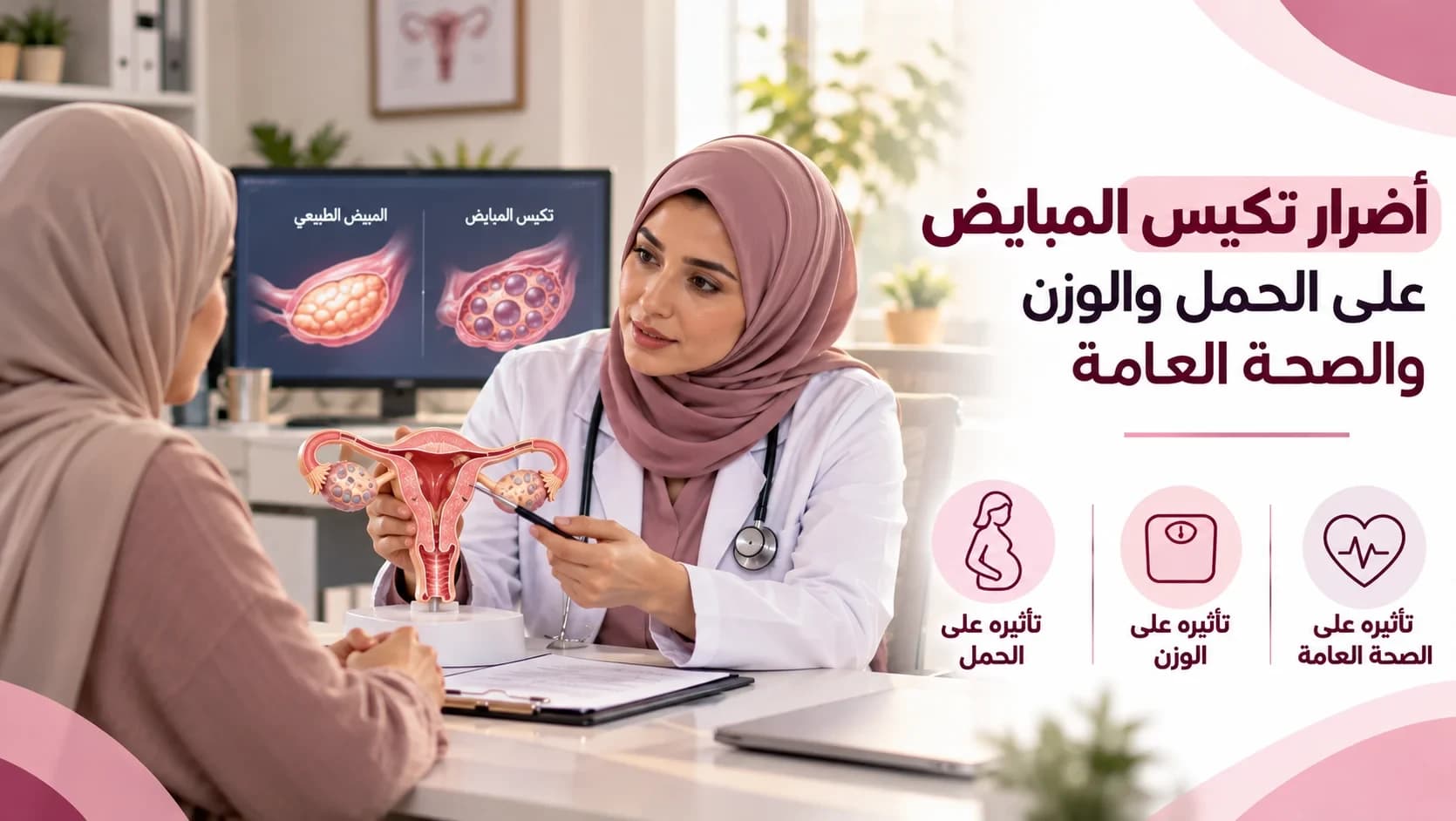
Polycystic ovary syndrome (PCOS) is a common hormonal disorder among women of reproductive age. It can affect menstrual regularity, ovulation, and the ability to conceive, and it may also be associated with other long-term health conditions. The effects of PCOS vary from one woman to another depending on her symptoms, overall health, and the consistency of medical follow-up and treatment. Therefore, early diagnosis can help manage symptoms and reduce the likelihood of certain complications. In this article, we explore the main effects of PCOS on fertility, weight, and overall health, as well as when women should consult a gynecologist.
Medical Disclaimer: This article has been reviewed by Dr. Marwa Wanas, Consultant in IVF, Obstetrics, and Gynecology, to ensure the accuracy of the medical information presented and its suitability for health education about polycystic ovary syndrome.
What Is Polycystic Ovary Syndrome?
Polycystic ovary syndrome (PCOS) is a hormonal disorder that may lead to irregular ovulation and elevated levels of certain hormones, such as androgens. Women with PCOS may experience symptoms such as delayed menstrual periods, increased facial and body hair, acne, and difficulty conceiving. However, an ultrasound showing a polycystic appearance of the ovaries does not, by itself, mean that a woman has the syndrome. Diagnosis depends on evaluating symptoms, medical history, and appropriate tests.
It is important to distinguish PCOS from individual ovarian cysts, as the causes and complications of these conditions differ.
Effects of PCOS on Menstrual Cycles and Ovulation
One of the most common effects of PCOS is menstrual irregularity caused by disrupted ovulation. Periods may become less frequent, occur fewer times throughout the year, or stop for extended periods in some women. The impact goes beyond difficulty predicting when a period will occur. Prolonged absence of ovulation may also disrupt the hormonal processes responsible for the growth and shedding of the uterine lining.
Potential effects include:
Delayed menstrual periods or prolonged absence of menstruation.
Difficulty identifying ovulation days when trying to conceive.
Irregular development of the uterine lining due to infrequent ovulation.
The need for medical evaluation to regulate menstrual cycles and reduce the risk of complications.
If your periods stop for extended periods or become noticeably irregular, it is best not to ignore the issue or take medication to induce menstruation without consulting a gynecologist.
Does PCOS Prevent Pregnancy?
A diagnosis of PCOS does not mean that pregnancy is impossible. However, the condition may reduce the chances of conception in some women because of irregular or absent ovulation. When the ovaries do not release a mature egg regularly, the chances of natural fertilization may decrease, and the woman may need ovulation monitoring or treatment to help induce ovulation.
The treatment plan depends on the woman's age, how long she has been trying to conceive, the regularity of ovulation, and whether either partner has other factors contributing to infertility. Management may include lifestyle changes or medication to stimulate ovulation under medical supervision. Other fertility treatments may be considered when necessary.
Therefore, PCOS alone does not mean that IVF or ICSI is required. Many women with PCOS can conceive after appropriate evaluation and treatment.
Complications of PCOS on Overall Health
In some women, the effects of PCOS extend beyond the reproductive system, as the syndrome is associated with metabolic problems that may persist for years. This does not mean that every woman with PCOS will develop these complications, but understanding the potential risks helps support prevention and regular monitoring.
Insulin Resistance and Diabetes
Some women with PCOS develop insulin resistance, a condition in which the body's cells do not respond to insulin as effectively as usual. This may be associated with an increased risk of type 2 diabetes, particularly when additional risk factors are present, such as excess weight or a family history of the disease. Depending on the individual's condition, the gynecologist may recommend blood glucose testing and an assessment of metabolic risk factors.
Increased Risk of Cardiovascular Disease
PCOS may be associated with abnormal blood lipid levels, high blood pressure, and insulin resistance, all of which can affect cardiovascular health. For this reason, follow-up may include blood pressure measurements and assessments of blood lipids and glucose, depending on individual risk factors, rather than focusing solely on menstrual symptoms.
Does PCOS Cause Weight Gain and Hair Loss?
Some women with PCOS may experience weight gain or difficulty losing weight, but this does not affect everyone with the condition. Weight alone is also insufficient to diagnose PCOS. Insulin resistance, hormonal factors, and lifestyle habits may all contribute to differences in weight between individuals. A balanced diet and regular physical activity can help improve metabolic health, even if significant weight loss does not occur.
Elevated androgen levels in some women may also lead to increased facial or body hair, acne, or thinning hair on the scalp. The severity of these symptoms varies, and other conditions can cause similar changes. Therefore, new or worsening symptoms should be evaluated by a gynecologist rather than treated with cosmetic products or hormonal medications without a proper diagnosis.
Does PCOS Increase the Risk of Endometrial Cancer?
Prolonged irregular ovulation may be associated with an increased risk of endometrial hyperplasia, and the risk of endometrial cancer may be higher in some women with PCOS, particularly when menstrual periods remain absent for extended periods and other risk factors are present. However, having PCOS does not mean that a woman will develop cancer, and this outcome is not inevitable.
Medical follow-up helps assess menstrual regularity and determine whether treatment is needed to regulate periods or protect the uterine lining. The treatment plan varies according to age, symptoms, medical history, and pregnancy plans. Women should inform their gynecologist if their periods stop for a prolonged period or if unusual bleeding occurs. Medical evaluation should not be delayed on the assumption that PCOS is the only possible cause.
How Can the Effects of PCOS Be Reduced?
There is no single treatment suitable for every woman with PCOS, but an individualized plan can help control symptoms and reduce certain health risks. The gynecologist determines the appropriate treatment based on symptoms and health goals, whether the woman wishes to conceive, needs to regulate her menstrual cycle, or wants to manage skin-related symptoms.
The plan may include:
Following a balanced diet that includes vegetables, fruits, protein sources, and whole grains.
Engaging in regular physical activity according to individual ability and health status.
Monitoring menstrual cycles and recording noticeable changes.
Undergoing recommended tests to assess blood glucose, blood pressure, and lipid levels when needed.
Taking prescribed medications only and avoiding hormonal treatments or ovulation-inducing medications without medical supervision.
Attending regular medical appointments to assess the response to treatment and adjust it when necessary.
Even when symptoms improve, follow-up remains important because some hormonal and metabolic problems may change over time.
When Should You See a Gynecologist About PCOS?
You should consider scheduling a medical appointment if you experience recurrent menstrual irregularities or missed periods, noticeable increases in facial or body hair, worsening acne, or difficulty conceiving. Rapid or significant changes in symptoms also warrant medical evaluation to identify the cause, as not every symptom is necessarily related to PCOS.
Severe, sudden pelvic pain, particularly when accompanied by vomiting, dizziness, or fever, requires urgent medical assessment. It may have other causes that need prompt treatment, such as ovarian torsion or a ruptured ovarian cyst. These emergencies should not be confused with the usual hormonal complications of PCOS.
Book Your Consultation with Dr. Marwa Wanas
If you experience irregular menstrual cycles or symptoms that may be associated with PCOS, a medical evaluation can help you understand the underlying cause and choose a treatment plan suited to your condition and health goals.
Dr. Marwa Wanas provides specialized gynecological care, hormonal treatment, ovulation monitoring, and fertility treatment in Alexandria. Book a consultation to discuss your symptoms, determine which tests may be appropriate, and explore the available options for regulating your menstrual cycle or improving your chances of conception when needed.
Frequently Asked Questions About the Effects of PCOS
Is PCOS Dangerous?
Not necessarily. Some women experience mild symptoms, but PCOS may be associated with long-term health risks, including insulin resistance, diabetes, and disorders of the uterine lining. Appropriate follow-up helps assess these risks and manage them effectively.
Does PCOS Permanently Prevent Pregnancy?
No. PCOS does not mean permanent infertility. It may affect ovulation regularity, but pregnancy can occur naturally or with treatment to induce ovulation, depending on the woman's health and whether other factors are contributing to infertility.
Does PCOS Cause Delayed Menstrual Periods?
Yes. The ovulatory dysfunction associated with PCOS may cause delayed periods or prolonged absence of menstruation. If this occurs repeatedly, it is best to consult a gynecologist to determine the cause and appropriate treatment.
Does PCOS Cause Weight Gain?
PCOS may be associated with weight gain or difficulty losing weight in some women, but this does not occur in everyone. Weight management depends on an individual assessment and a healthy lifestyle, along with treatment for any associated conditions as recommended by the gynecologist.
Can PCOS Be Cured Permanently?
There is no single treatment that permanently eliminates PCOS in every woman. However, symptoms can be managed and associated risks reduced through appropriate treatment, lifestyle changes, and regular follow-up. The treatment plan depends on the woman's symptoms and pregnancy goals.
What Tests Are Needed to Diagnose PCOS?
No single test can confirm the diagnosis on its own. The gynecologist may consider symptoms, medical history, and physical examination, and may request hormone tests or other investigations to rule out alternative causes. An ultrasound may also be recommended when appropriate.