

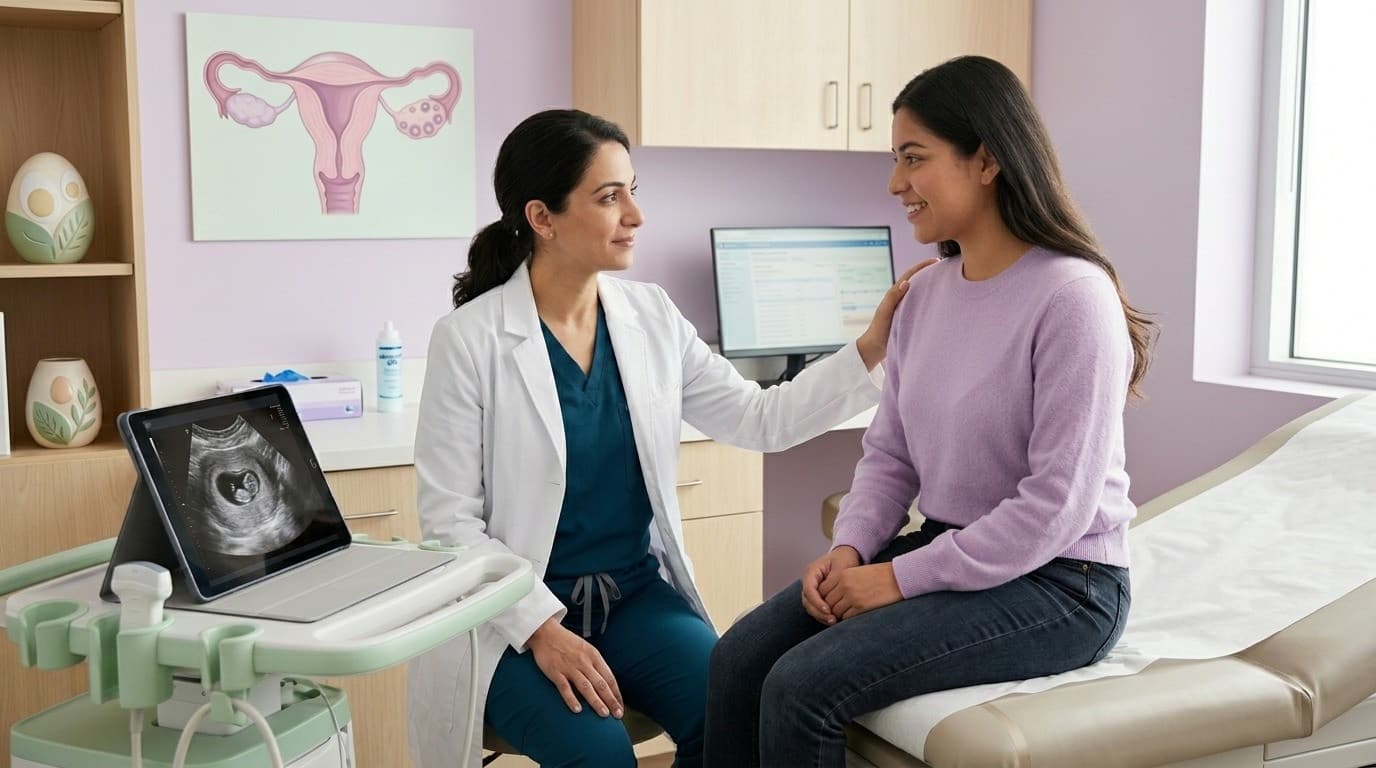
Every woman dreams of motherhood, and one question often lives deep inside her heart: Will I ever become a mother? After being diagnosed with Polycystic Ovary Syndrome (PCOS), this question can quickly turn into daily anxiety and endless uncertainty. But PCOS is not the end of the dream — it is the beginning of understanding your body on a deeper level. In this article, we will take you on a comprehensive and hopeful journey to discover everything you need to know about PCOS and pregnancy, and how this diagnosis can become the first step toward motherhood.
What Is Polycystic Ovary Syndrome (PCOS)?
PCOS occurs when hormones become imbalanced inside the body. Eggs begin to mature but are not released properly, causing them to accumulate as small cysts on the surface of the ovaries. This is the basic picture of Polycystic Ovary Syndrome.
PCOS affects approximately 8% to 13% of women of reproductive age worldwide and is considered one of the leading causes of ovulation disorders. However, it is not only a reproductive condition — it also affects metabolism, weight, skin, hair, and even mood. Once you understand this, you begin treating your body as a complete system that deserves care from every angle.
Symptoms of PCOS and Pregnancy Challenges
Your body speaks to you every day in its own language — are you listening carefully? PCOS sends clear signals, and the earlier they are recognized, the easier the treatment journey becomes.
Common symptoms include:
Irregular or missed periods for months at a time.
Excess hair growth on the chin, chest, or abdomen.
Persistent acne that appears on the jawline or back.
Hair thinning or hair loss similar to male-pattern baldness.
Weight gain that is difficult to lose, especially around the abdomen.
Dark patches on the neck, underarms, or beneath the breasts (acanthosis nigricans).
Mood swings, anxiety, and depression.
Difficulty getting pregnant due to irregular ovulation.
Does PCOS Prevent Pregnancy?
The main reason PCOS affects fertility is irregular ovulation. Women with PCOS may not release an egg every month, and sometimes ovulation may stop completely for several months. Without ovulation, pregnancy cannot occur during that cycle.
In addition, high insulin levels may affect egg quality and reduce the effectiveness of the uterine lining, slightly increasing the risk of early miscarriage.
However, there is encouraging news: studies show that 70% to 80% of women with PCOS eventually become pregnant — naturally, through lifestyle changes, with fertility medications, or with assisted reproductive technologies. Women with PCOS also tend to maintain a good ovarian reserve for a longer period, giving them a wider fertility window.
PCOS Treatment and Fertility: Your Roadmap to Motherhood
Lifestyle Changes Before Medication
Doctors often say that losing just 5% to 10% of body weight can restore regular periods and natural ovulation. Scientific research strongly supports this.
A low-glycemic diet rich in vegetables, proteins, and healthy fats — while reducing refined sugars and processed carbohydrates — is considered the first line of treatment. Adding 30 minutes of daily walking can create noticeable improvements within a few months.
Fertility-Friendly Medications
Metformin helps treat insulin resistance and improves ovulation.
Letrozole has become one of the most effective ovulation induction medications and has shown higher pregnancy rates compared to Clomiphene Citrate in recent studies.
Gonadotropin injections are used in resistant cases but require close medical monitoring to avoid ovarian hyperstimulation.
Assisted Reproductive Techniques
When oral medications are not enough, intrauterine insemination (IUI) may be recommended as a next step, followed by in vitro fertilization (IVF), which can achieve success rates exceeding 50% in women under 35 years old.
Laparoscopic ovarian drilling may also help restore hormonal balance in women who do not respond to medication.
Supplements and Natural Support
Certain supplements have shown promising results in improving ovulation and egg quality, including:
Myo-inositol and D-chiro-inositol.
Vitamin D.
Omega-3 fatty acids.
Folic acid.
Some herbs such as cinnamon and fenugreek may also provide additional support under medical supervision.
Pregnancy After PCOS: Protecting Your Precious Journey
Getting pregnant is a huge milestone, but the journey does not end there. Women with PCOS may have a higher risk of:
Gestational diabetes.
High blood pressure during pregnancy.
Preterm birth.
The good news is that these risks can often be greatly reduced through regular medical follow-up, healthy nutrition, and continuing prescribed medications such as Metformin under medical supervision.
Motherhood Is Stronger Than Any Obstacle
At the end of this journey, remember one important truth: PCOS is not your enemy. It is simply your body asking for more care, understanding, and attention. Thousands of women with PCOS have successfully become mothers after years of trying. Diagnosis is not the end — it is the beginning of awareness, healing, and hope.
Frequently Asked Questions About PCOS and Pregnancy
Can PCOS Be Completely Cured?
PCOS is considered a chronic condition with no permanent cure yet, but its symptoms can be successfully managed, allowing women to achieve pregnancy and live healthy lives.
How Long Does Treatment Take Before Pregnancy?
Most women respond to ovulation medications within 3 to 6 menstrual cycles. Some conceive quickly, while others may need more time.
Do Herbal Drinks Really Help?
Some herbs such as cinnamon, spearmint, fenugreek, and turmeric have shown promising benefits in studies, but they should be used as supportive treatments rather than replacements for medical care.
Is Exercise Alone Enough to Treat PCOS?
Exercise is extremely important, but it is not enough on its own. The best results come from combining physical activity with healthy eating, proper sleep, stress management, and regular medical follow-up.