

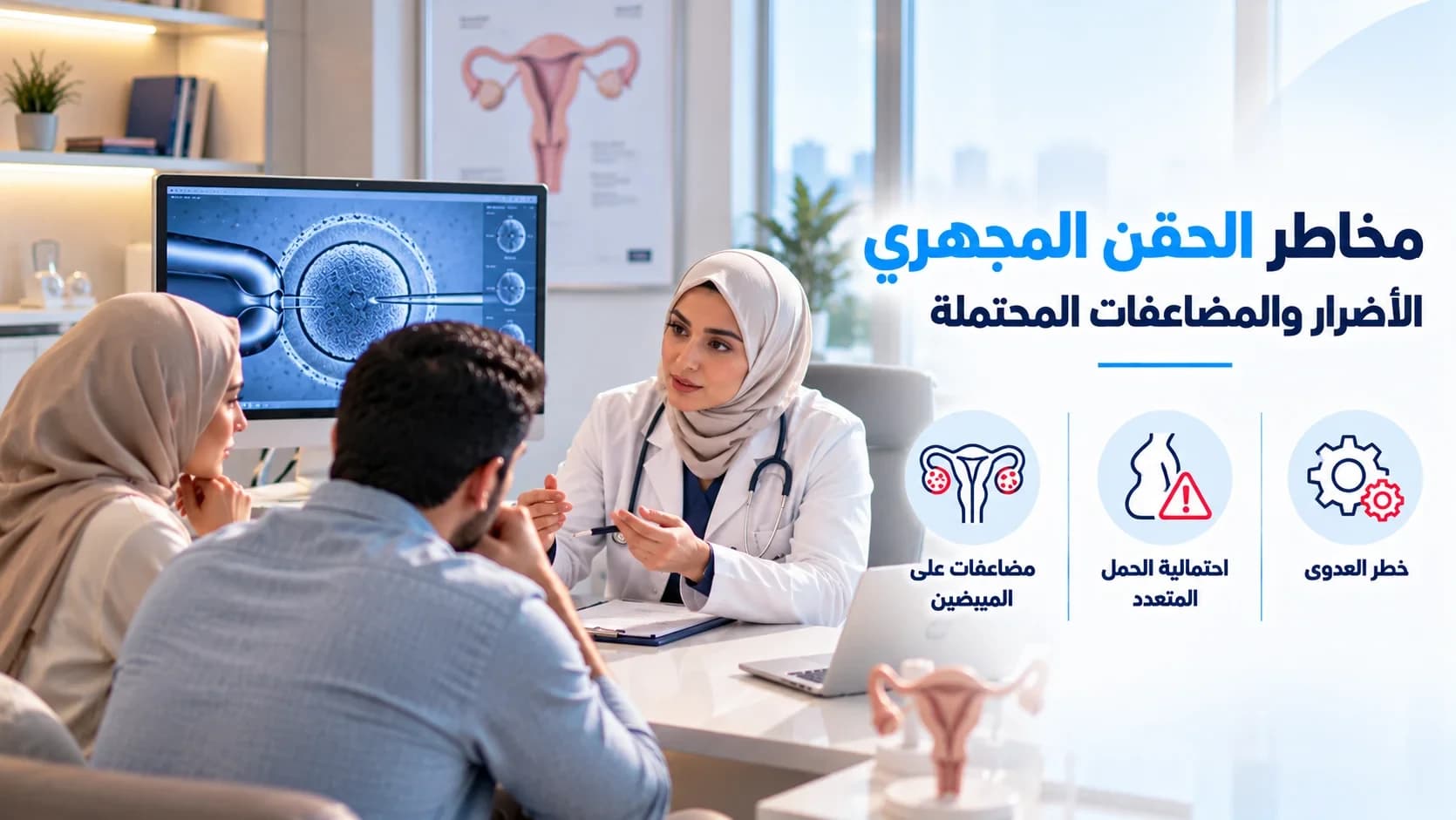
IVF is one of the assisted reproductive technologies that helps many couples achieve pregnancy, but like any medical procedure, it is not completely free of risks. The level of risk varies depending on the woman’s age, health condition, cause of infertility, response to ovarian stimulation medications, and number of embryos transferred. Therefore, understanding the risks of IVF does not mean that the treatment is unsafe; rather, it helps couples make an informed decision in cooperation with their doctor.
Medical Disclaimer: This article was medically reviewed by Dr. Marwa Wanas before final publication. The information provided does not replace a medical evaluation of an individual case.
What Are the Risks of IVF?
Most risks are associated with the fertility treatment cycle itself rather than the process of injecting the sperm into the egg. Specialized medical organizations indicate that fertility treatments are generally safe, but complications can occur, ranging from mild symptoms to conditions requiring medical intervention. The main risks of IVF include ovarian hyperstimulation syndrome, rare complications associated with egg retrieval, and an increased likelihood of multiple pregnancy when more than one embryo is transferred.
Ovarian Hyperstimulation Syndrome
Ovarian hyperstimulation syndrome occurs when the ovaries respond excessively to fertility medications, causing the ovaries to enlarge and fluid to accumulate in the abdomen. Symptoms may include bloating, abdominal pain, and nausea, while severe cases require urgent medical follow-up, particularly if shortness of breath, reduced urination, or dehydration occurs. A doctor can reduce the risk by monitoring the response to ovarian stimulation and adjusting the treatment protocol according to the individual case.
IVF Side Effects on Women
During an IVF cycle, a woman may experience some symptoms related to hormones and the egg retrieval procedure. Their severity varies from one case to another, so not every symptom after treatment should be considered a sign of a serious problem. It is important to attend scheduled follow-up appointments and inform the doctor of any unusual symptoms, particularly severe pain, increasing abdominal swelling, persistent vomiting, or shortness of breath. Egg retrieval is also associated, in rare cases, with the possibility of bleeding, infection, or injury to a nearby organ.
IVF Risks to the Embryo
The potential risks of IVF to the embryo should be discussed carefully, as studies do not establish that the ICSI technique itself is responsible for every potential increase in risk. Couples who undergo ICSI may already have infertility-related factors, such as certain causes of male infertility, and these factors may affect outcomes. The HFEA notes that there are some concerns regarding rare genetic or developmental abnormalities, but it cannot be established that the treatment itself is responsible for all such cases.
Does ICSI Cause Birth Defects?
It cannot be stated that ICSI directly causes birth defects. Study results vary depending on study design and infertility-related factors, so generalizations or unnecessary alarm should be avoided. One analysis published on PubMed did not find a statistically significant increase in major congenital abnormalities when comparing ICSI with conventional IVF, while other reviews have reported potential associations that require interpretation in light of the cause of infertility and other factors.
Does ICSI Increase the Chance of Having Twins?
Multiple pregnancy in fertility treatment is largely associated with the number of embryos transferred to the uterus rather than simply using the ICSI technique. A twin or higher-order multiple pregnancy may increase pregnancy and childbirth risks, such as preterm birth and certain pregnancy complications. For this reason, single embryo transfer strategies are appropriate for many cases with the aim of reducing multiple pregnancies when medically suitable. The HFEA identifies multiple pregnancy as one of the main risks associated with fertility treatments.
Risks of Egg Retrieval During IVF
Egg retrieval is a procedure in which the ovaries are accessed to collect mature eggs, usually under anesthesia or sedation according to the medical center’s protocol. Although the procedure is routinely performed, there are rare possibilities of complications such as bleeding, infection, or injury to nearby organs. Medical follow-up therefore remains important after the procedure, particularly if severe pain, fever, or unusual symptoms occur. Some eggs may also be damaged during the injection process itself, which is a risk specific to the ICSI technique.
Are There Genetic Risks With ICSI?
There may be genetic considerations in some ICSI cases, particularly when infertility is associated with severe male-factor infertility or a known genetic cause. In some cases, the genetic cause associated with infertility may be passed on to children. Therefore, a doctor may recommend genetic counseling or genetic testing before treatment if the case warrants it. The HFEA notes that transmission of certain causes of male infertility to male offspring is one consideration that should be discussed before ICSI in appropriate cases.
How Can IVF Risks Be Reduced?
Not all complications can be prevented 100%, but proper evaluation before treatment and careful monitoring during the stimulation cycle can help reduce risks. The doctor determines medication doses based on age, ovarian reserve, and response to treatment, while monitoring hormone levels and performing ultrasound examinations when necessary. The stimulation plan may also be adjusted, or embryo transfer may be postponed in some cases to reduce the risk of ovarian hyperstimulation syndrome.
It is also important not to take any medications or supplements during the treatment cycle without consulting the doctor and to follow the medical center’s instructions after egg retrieval and embryo transfer.
When Should You Contact Your Doctor After IVF?
After IVF procedures, severe or worsening symptoms should not be ignored. It is recommended to contact the fertility treatment center promptly if you experience significant or persistent abdominal swelling or pain, repeated vomiting, severe dizziness, a noticeable decrease in urine output, or difficulty breathing.
Urgent evaluation becomes even more important if symptoms may indicate ovarian hyperstimulation syndrome or another pregnancy-related complication. In cases of difficulty breathing, chest pain, or severe symptoms, seek immediate medical care.
Book Your Consultation to Evaluate Your Condition Before IVF
Understanding the risks of IVF is important, but the most important step is understanding the specific risks associated with your individual case, as treatment safety and response vary from one woman to another. Evaluation before starting ovarian stimulation helps the doctor choose an appropriate protocol, identify risk factors, and discuss the most suitable number of embryos for transfer.
If you are considering IVF or have previously undergone an unsuccessful attempt, book a consultation with a specialist in infertility treatment to evaluate your condition and develop an appropriate and safe treatment plan.
Frequently Asked Questions About IVF Risks
Is IVF Safe?
IVF is generally considered safe when performed under the supervision of a specialized medical team, but it is not completely free of risks. These include risks associated with stimulation medications, ovarian hyperstimulation syndrome, some rare complications of egg retrieval, and multiple pregnancy when more than one embryo is transferred.
Does ICSI Cause Birth Defects?
There is no evidence allowing us to state that ICSI directly causes birth defects in every case. Some studies have investigated potential associations, but the interpretation of these findings is also affected by parental age, the cause of infertility, and genetic factors associated with the condition.
What Are the Most Serious Complications of IVF?
Among the complications that require particular attention are ovarian hyperstimulation syndrome, especially in severe cases, multiple pregnancy, and some rare complications associated with egg retrieval. Careful medical monitoring helps identify risk factors and address them early.
Can Ectopic Pregnancy Occur After IVF?
Yes, ectopic pregnancy can occur after fertility treatments. Early pregnancy monitoring is therefore performed to confirm the location of the gestational sac according to the doctor’s assessment. An ectopic pregnancy occurs when the pregnancy implants outside the uterine cavity, most commonly in a fallopian tube.
Can ICSI Cause Infertility in the Child Later in Life?
It cannot be established that ICSI itself causes infertility in children. However, if the father’s infertility is associated with a genetic factor, there may be a possibility of passing that factor on, particularly in some cases of severe male infertility. Genetic counseling may therefore be appropriate for some couples before treatment.