

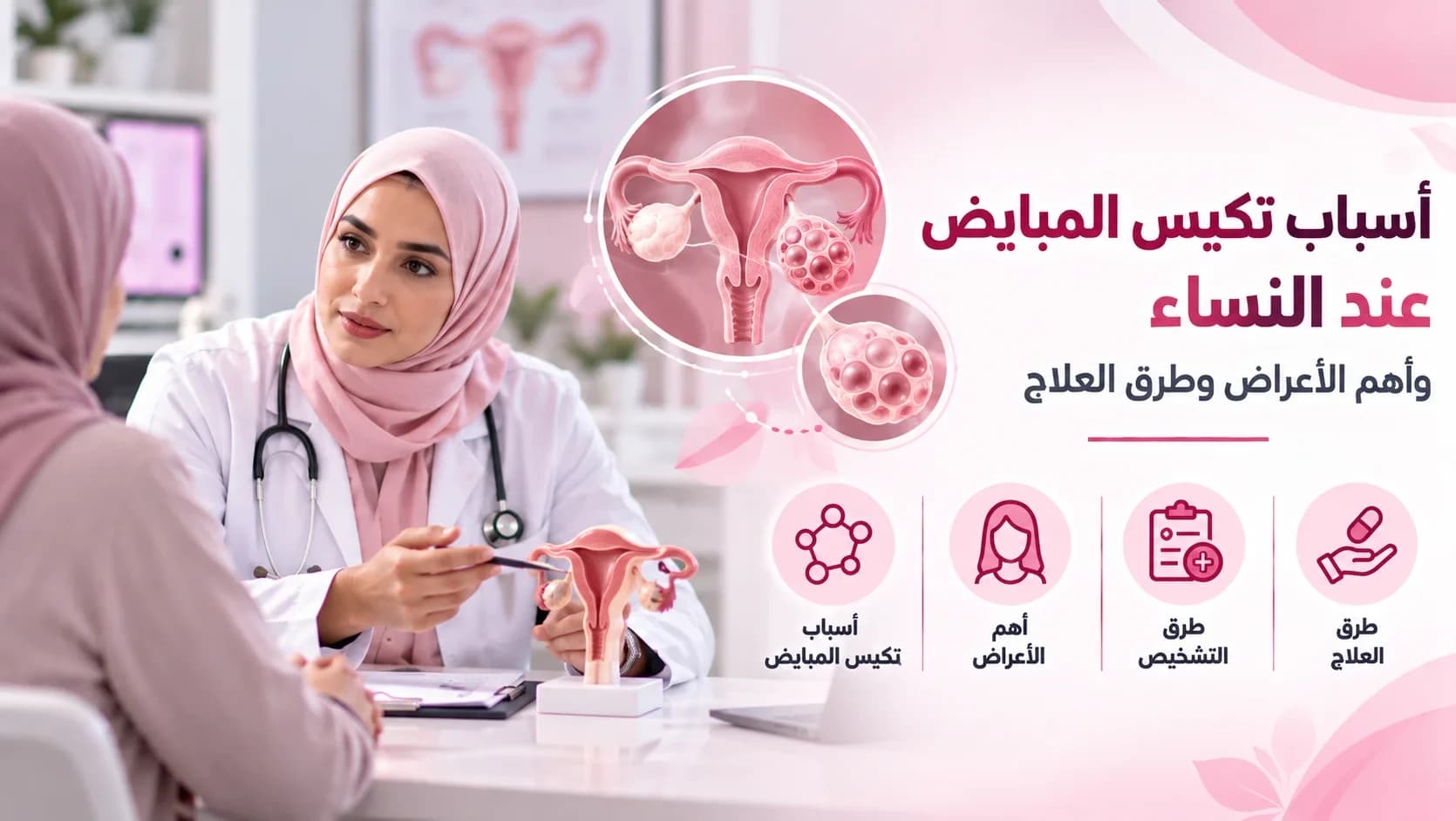
Polycystic ovary syndrome (PCOS) is a common hormonal disorder among women of reproductive age. It can affect menstrual regularity, ovulation, and the chances of pregnancy. Symptoms vary from one woman to another and may include delayed periods, excessive hair growth, or acne, while some women may not notice any obvious symptoms initially. Many women search for the causes of polycystic ovary syndrome to understand the factors that contribute to its development and how to manage it. In this article, we explore the possible causes, risk factors, diagnostic methods, and treatment options based on each individual case.
Medical Disclaimer: This article has been medically reviewed by Dr. Marwa Wanas, Consultant in IVF, Obstetrics, and Gynecology, to ensure the accuracy of the information provided and its consistency with established medical guidelines and references.
What Are the Causes of Polycystic Ovary Syndrome?
There is no single confirmed cause of polycystic ovary syndrome, but research suggests that genetic factors, hormonal imbalances, and abnormalities in the body's response to insulin may all contribute to its development. These factors affect egg development and ovulation regularity and may lead to elevated androgen levels. Androgens are hormones found in both women and men, but in different amounts.
The condition may manifest as irregular menstrual cycles, delayed pregnancy, or excessive facial and body hair growth. It is important to understand that PCOS is not the result of anything a woman has done wrong, nor does it necessarily mean that cysts requiring surgery are present. Diagnosis depends on a combination of signs and tests rather than the appearance of the ovaries alone.
What Factors Contribute to Polycystic Ovary Syndrome?
Insulin Resistance and Hormonal Imbalances
Insulin resistance is one of the important factors associated with polycystic ovary syndrome. In this condition, the body's cells become less responsive to insulin, sometimes causing the body to produce larger amounts of it to help regulate blood sugar levels. Elevated insulin levels may stimulate the ovaries to produce more androgens, affecting egg maturation and regular ovulation.
Genetic Factors and Weight Gain
The likelihood of developing PCOS may increase if other family members have the condition, although a family history does not necessarily mean that a woman will develop it. Weight gain can also worsen insulin resistance and hormonal imbalances in some women. However, excess weight is not a requirement for developing the syndrome, as women of different body weights can be affected.
What Are the Symptoms of Polycystic Ovary Syndrome in Women?
PCOS symptoms vary depending on the nature and severity of the hormonal imbalance and may change over time. The most common signs that warrant medical evaluation include:
Irregular menstrual periods or long intervals between periods.
Excessive facial or body hair growth.
Acne or increased skin oiliness.
Thinning scalp hair in a pattern associated with elevated androgen levels.
Difficulty conceiving due to ovulation disorders.
Weight gain or difficulty losing weight in some women.
These symptoms alone do not necessarily indicate PCOS, as they can also occur due to other conditions. Therefore, women are advised to consult a gynecologist if menstrual irregularities persist or noticeable hormonal changes occur, rather than relying on symptoms alone to determine the cause.
Does Polycystic Ovary Syndrome Prevent Pregnancy?
A diagnosis of PCOS does not mean that pregnancy is impossible. Many women with the condition conceive naturally or after receiving appropriate treatment. Some women experience difficulty conceiving because of irregular ovulation or the failure to release an egg regularly, which can reduce the chances of fertilization during certain menstrual cycles.
Management depends on the woman's age, how long she has been trying to conceive, the regularity of ovulation, and whether either partner has other fertility-related factors. Treatment may include lifestyle modifications or medications to stimulate ovulation under specialist supervision. If pregnancy does not occur, the doctor may recommend additional tests to evaluate the fertility of both partners before determining whether assisted reproductive techniques are needed.
How Is Polycystic Ovary Syndrome Diagnosed?
PCOS cannot be diagnosed based on ultrasound alone. Instead, the doctor combines the patient's medical history, symptoms, physical examination, and appropriate tests while ruling out other conditions that may cause similar symptoms. In adults, diagnosis is generally based on the presence of at least two of three criteria after other possible causes have been excluded.
These criteria include ovulatory dysfunction, clinical or laboratory evidence of elevated androgen levels, or polycystic ovarian morphology on ultrasound. The doctor may request hormone tests and blood glucose and lipid tests depending on the individual case. Not every woman needs all these tests, and diagnostic criteria differ for adolescents. Therefore, the doctor should determine the appropriate evaluation based on age and symptoms.
What Are the Treatment Options for Polycystic Ovary Syndrome and Hormonal Imbalances?
Treatment for PCOS varies according to the woman's symptoms and goals, whether she wants to regulate her menstrual cycle, improve skin-related symptoms, or plan for pregnancy. There is no single treatment that suits every case, so the doctor develops a plan based on the woman's health and hormonal assessment.
Treatment options may include dietary improvements and physical activity, medications to regulate menstrual cycles or reduce the effects of androgens when necessary, and ovulation-inducing medications for women who wish to conceive. Medications that improve the body's response to insulin may also be used in selected cases. Hormonal medications and ovulation stimulants should not be taken without a prescription, as medication selection, dosage, and monitoring depend on the individual case. The treatment plan may also need to be adjusted over time.
Book Your Consultation with Dr. Marwa Wanas for Polycystic Ovary Syndrome Treatment
If you experience irregular menstrual cycles, symptoms of hormonal imbalances, or difficulty conceiving, early evaluation can help identify the cause and determine the appropriate treatment. Dr. Marwa Wanas, Consultant in IVF, Obstetrics, and Gynecology in Alexandria, provides diagnostic and treatment services for PCOS, ovulation disorders, and fertility problems.
You can book a consultation to discuss your symptoms and medical history and undergo any necessary tests, with a treatment plan tailored to your health and reproductive goals.
Frequently Asked Questions About the Causes of Polycystic Ovary Syndrome
Is Polycystic Ovary Syndrome a Serious Condition?
Not necessarily. However, in some cases, inadequate follow-up may increase the risk of blood sugar and lipid disorders and endometrial problems associated with prolonged periods without ovulation. Appropriate treatment and regular monitoring can help reduce these risks.
Can Polycystic Ovary Syndrome Cause Delayed Menstrual Periods?
Yes. Hormonal imbalances and ovulation disorders can cause delayed or irregular periods. However, other conditions can also cause menstrual irregularities, so medical evaluation is recommended if the problem occurs repeatedly.
Can Polycystic Ovary Syndrome Be Cured Permanently?
Responses vary from one woman to another, and no treatment guarantees that the syndrome will disappear permanently in every case. However, symptoms can be managed and menstrual regularity and ovulation can be improved through an appropriate treatment plan and ongoing follow-up.
Does Being Underweight Prevent Polycystic Ovary Syndrome?
No. Underweight women can also develop PCOS. Excess weight may worsen certain symptoms in some cases, but it is not a requirement for developing the condition.
Can Polycystic Ovary Syndrome Be Diagnosed by Ultrasound Alone?
No. Ultrasound is part of the evaluation when needed, but it is not sufficient on its own to diagnose or rule out the syndrome. Diagnosis depends on symptoms, medical history, and appropriate tests in accordance with established medical criteria.