

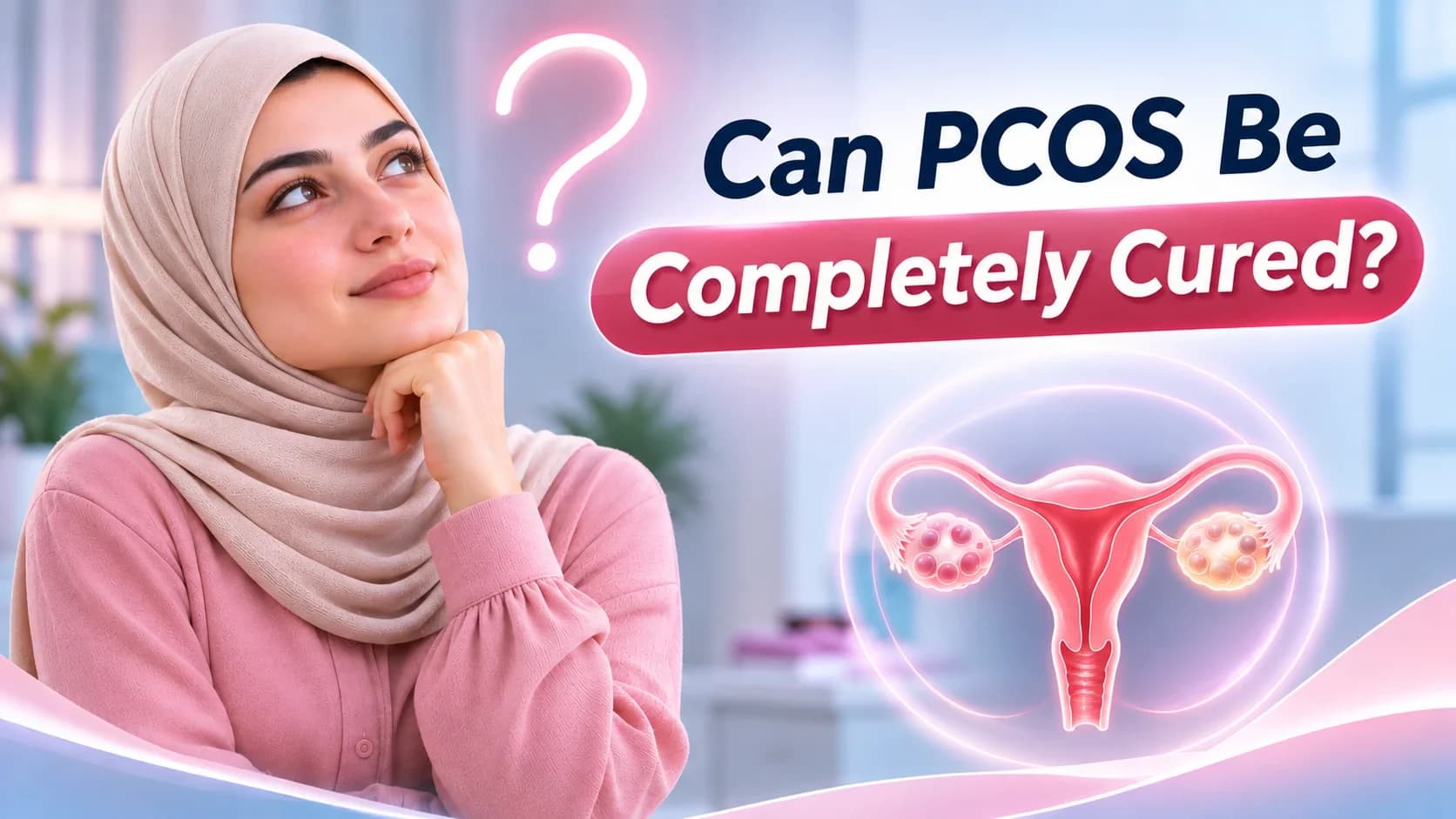
Many women and young girls wonder after being diagnosed with Polycystic Ovary Syndrome (PCOS): Can PCOS be cured permanently? And do hormone levels and ovulation return to normal after treatment? The truth is that PCOS is a hormonal disorder whose symptoms and effects on health and fertility can be managed and improved. However, it requires ongoing follow-up and a treatment plan tailored to each individual case. Management depends on several factors, including menstrual cycle regularity, the presence of insulin resistance, weight, and whether the patient wishes to become pregnant.
Medical Disclaimer: This article has been reviewed by Dr. Marwa Wanas, IVF and Obstetrics and Gynecology Consultant, to ensure the accuracy of the medical information it contains.
What Is the Difference Between Polycystic Ovaries and Polycystic Ovary Syndrome?
It is important to distinguish between having a polycystic appearance of the ovaries on an ultrasound and being diagnosed with Polycystic Ovary Syndrome (PCOS). PCOS is a hormonal and metabolic disorder that may affect ovulation and menstrual cycle regularity and may be associated with elevated androgen levels or insulin resistance.
However, the presence of small follicles on an ultrasound alone does not necessarily mean that a woman has PCOS. Likewise, some women with the syndrome may not show the typical appearance of polycystic ovaries. Therefore, diagnosis is not based on ultrasound alone. Instead, the doctor considers symptoms and test results while ruling out other possible causes.
Can PCOS Go Away on Its Own?
There is currently no treatment that guarantees the permanent elimination of PCOS in all affected women, as it is a condition that may persist for years, with symptoms changing according to age, weight, and hormonal factors.
Nevertheless, some women may experience significant improvement in their symptoms, such as more regular menstrual cycles, improved ovulation, and reduced acne or excess hair growth, particularly when they follow their treatment plan and make lifestyle changes. Some signs may become less noticeable or disappear for periods of time, but this does not necessarily mean that the hormonal predisposition associated with the syndrome has disappeared or that symptoms cannot return.
What Factors Help Improve PCOS Symptoms?
Taking care of overall health and daily habits can help improve PCOS symptoms, whether or not the patient is overweight. There is no single diet proven to be the best for all women with PCOS, so it is preferable to adopt sustainable habits, including:
Eating balanced meals containing vegetables, protein, fiber-rich foods, and appropriate sources of carbohydrates.
Engaging in regular physical activity, such as walking, aerobic exercise, and resistance training.
Getting enough sleep and paying attention to sleep quality.
Avoiding restrictive diets or severe food deprivation.
Monitoring weight and health indicators without focusing on the number alone.
For women who are overweight, losing some weight may help improve insulin sensitivity and ovulation regularity. However, the benefits of a healthy lifestyle extend beyond weight loss.
How Is PCOS Treated Based on Its Symptoms?
There is no single treatment plan that works for every case. The gynecologist selects treatment according to the patient's symptoms and health goals, particularly whether she is planning to become pregnant. The treatment plan may include more than one approach to achieve comprehensive improvement.
Treating Menstrual Irregularities and Hormonal Imbalances
The doctor may prescribe hormonal treatments to regulate the menstrual cycle and reduce the effects of elevated androgen levels, such as certain types of combined oral contraceptive pills, if they are suitable for the patient's condition and there are no contraindications.
Regulating the menstrual cycle also helps reduce the risk of excessive thickening of the uterine lining, which may occur when menstruation is absent for prolonged periods.
Managing Insulin Resistance
The doctor may recommend metformin for some patients, particularly those with signs of insulin resistance or metabolic disorders. However, the medication is not automatically prescribed to every woman with PCOS and should not be taken without medical evaluation.
Treating Acne and Excess Hair Growth
Treatment depends on the severity of the symptoms and how much they affect the patient. It may include appropriate dermatological or hormonal treatments. Women planning to become pregnant should inform their doctor, as some medications used to treat excess hair growth are not suitable during pregnancy.
Can You Get Pregnant with Polycystic Ovary Syndrome?
Yes. Many women with PCOS can become pregnant, and having the condition does not mean permanent infertility. However, irregular ovulation or the absence of ovulation may make pregnancy more difficult for some women.
Managing fertility problems begins with evaluating the patient's overall health and hormone levels, assessing fertility factors in both partners, and then determining the most appropriate approach. Options may include lifestyle modifications or ovulation-induction medications. Fertility treatments such as intrauterine insemination (IUI) or in vitro fertilization (IVF/ICSI) may also be considered when necessary.
The appropriate option depends on the woman's age, test results, and whether other factors are contributing to infertility.
What Are the Signs That PCOS Is Improving?
Certain indicators may suggest that PCOS is being managed more effectively, but they do not prove that the condition has disappeared permanently. Some of the most notable signs include:
Improved menstrual cycle regularity and more consistent intervals between periods.
Improved ovulation, as confirmed through appropriate medical assessments and tests.
Reduction in certain symptoms of elevated androgen levels, such as acne or excess hair growth.
Improved blood sugar, cholesterol, and insulin resistance indicators when these abnormalities are present.
Improvements in weight or waist circumference in women who have excess weight or an increased waist measurement.
The rate of improvement varies from one woman to another. Some symptoms, such as excess hair growth, may take longer to improve. Therefore, results should be evaluated through medical follow-up rather than relying on a single symptom alone.
When Should You See a Gynecologist for PCOS Treatment?
You should schedule an appointment with a gynecologist if you experience recurring menstrual irregularities, prolonged absence of periods, noticeable excess hair growth or acne, or difficulty becoming pregnant.
Follow-up is also important if you are overweight or have signs of insulin resistance, elevated blood sugar, or abnormal cholesterol levels. You may need periodic evaluations to monitor symptoms and potential health risks associated with PCOS and to develop a treatment plan that adapts to your needs at different stages of life.
Early diagnosis helps prevent symptoms from being overlooked and allows them to be managed appropriately.
Book Your Consultation with Dr. Marwa Wanas for PCOS Management
If you are experiencing menstrual irregularities or symptoms of PCOS, do not rely on other people's experiences or take medication on your own. The condition varies from one woman to another, so you need a medical evaluation to identify the causes of your symptoms and determine the available management options, especially if you are planning to become pregnant.
Dr. Marwa Wanas, IVF and Obstetrics and Gynecology Consultant in Alexandria, provides diagnostic and treatment services for PCOS and hormonal disorders, as well as ovulation monitoring and fertility care, with a treatment plan tailored to each patient's needs.
Frequently Asked Questions About PCOS
Is PCOS a Chronic Condition?
PCOS is considered a long-term condition, and its symptoms may change over time. It can be managed through a healthy lifestyle, appropriate treatment, and regular medical follow-up.
Can PCOS Be Treated Without Medication?
Some symptoms may improve through balanced nutrition, physical activity, and better sleep. However, whether these steps are sufficient depends on the individual case. Some women may need medication to regulate their menstrual cycles, manage insulin resistance, or induce ovulation.
Does PCOS Prevent Pregnancy?
No. Many women with PCOS can become pregnant naturally or with the help of fertility treatments. The chances of pregnancy depend on ovulation regularity, age, and other health and reproductive factors.
Can PCOS Return After Treatment?
Some symptoms may return or change in severity after improving, because treatment helps manage the condition but does not guarantee its permanent elimination. Therefore, medical follow-up remains important even after menstrual cycles become regular or ovulation improves.