

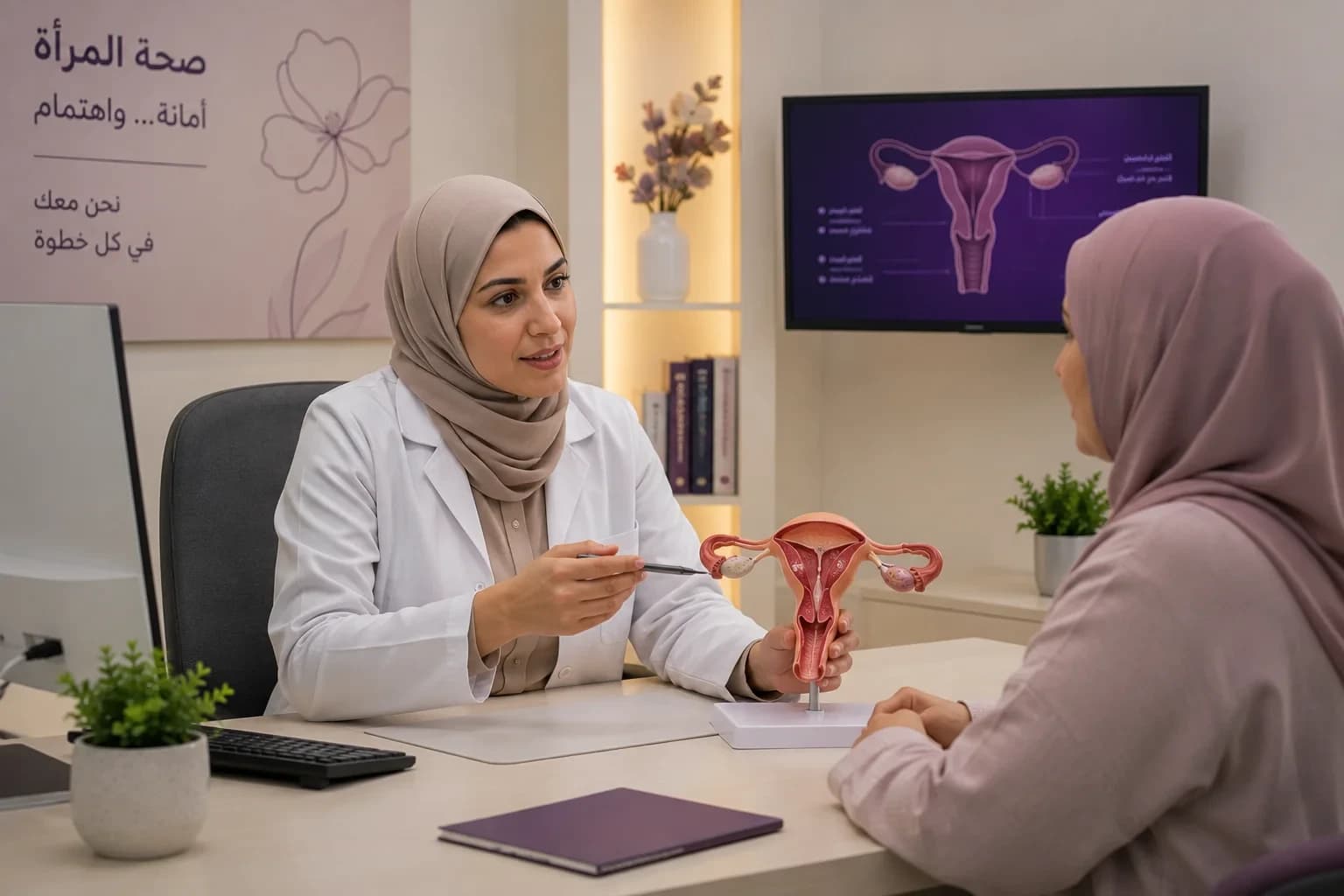
Uterine fibroids are among the most common gynecological conditions during the reproductive years. They are benign growths that develop from the muscular tissue of the uterine wall and do not mean that cancer is present. Some fibroids may remain small and cause no symptoms, while larger fibroids or those located in certain areas may lead to heavy menstrual bleeding, pelvic pain, or pressure on the bladder. In some women, they may also affect fertility. Management depends on the size, location, and number of fibroids, as well as symptoms and future pregnancy plans. Therefore, not every case requires treatment.
What Are Uterine Fibroids and Where Can They Develop?
Uterine fibroids are benign growths made up of muscle cells within the uterus. A woman may have one or multiple fibroids of different sizes. Their effect can vary depending on their location. A fibroid may grow within the uterine wall, protrude into the uterine cavity, or extend toward the outer surface of the uterus.
Fibroids located beneath the uterine lining are among the types that may have a more noticeable effect on bleeding and fertility because they can alter the shape of the uterine cavity. In contrast, some fibroids may remain small for years without causing any problems and may be discovered incidentally during a routine examination or ultrasound scan.
Causes of Uterine Fibroids and Factors That May Contribute to Their Growth
There is no single confirmed cause of uterine fibroids, but research suggests that their growth is associated with hormonal and genetic factors. Estrogen and progesterone appear to support the growth of fibroid tissue. This is why fibroids commonly develop during the reproductive years and may decrease in size after menopause as hormone levels decline.
Genetics may also play a role, as the likelihood of developing fibroids can be higher in women with a family history of the condition. However, having one risk factor does not necessarily mean that fibroids will develop. Evaluation should therefore consider medical history, clinical examination, and changes in the size and location of fibroids over time.
Uterine Fibroid Symptoms and When Should You Visit a Doctor?
Uterine fibroid symptoms vary from one woman to another, and some women may experience no symptoms at all. Common signs that may be associated with fibroids include:
Heavy menstrual bleeding or prolonged periods.
Pelvic pain or pressure in the lower abdomen or back.
Frequent urination due to pressure on the bladder.
Constipation or bloating when a fibroid is large.
Pain or discomfort during sexual intercourse.
Difficulty becoming pregnant in some cases.
Heavy and persistent bleeding may lead to anemia and fatigue. A consultation with a gynecologist is recommended if you experience unusual bleeding, persistent pain, or symptoms that affect your daily life.
How Are Uterine Fibroids Diagnosed?
The diagnosis of uterine fibroids usually begins with a discussion of symptoms and medical history, followed by an appropriate gynecological examination. Imaging is then used to determine the number, size, and location of the fibroids.
Ultrasound is one of the most important initial examinations because it helps visualize the uterus and identify the characteristics of fibroids. In some cases, more detailed investigations may be needed depending on the location of the fibroid and the patient's symptoms, such as magnetic resonance imaging or an examination of the uterine cavity.
Hysteroscopy may also be used to directly examine fibroids that protrude into the uterine cavity, helping determine whether they can be removed through a minimally invasive hysteroscopic procedure.
Can Uterine Fibroids Prevent Pregnancy? How Do They Affect Fertility?
The question “Can uterine fibroids prevent pregnancy?” does not have one answer that applies to every woman. Having fibroids does not necessarily mean infertility. Many women can become pregnant despite having uterine fibroids.
However, their potential effect depends largely on their location, size, and the extent to which they affect the uterine cavity. Fibroids that distort the uterine cavity, especially submucosal fibroids, are more commonly associated with fertility problems or pregnancy loss than some other types.
Therefore, if a woman is planning pregnancy, fibroids should be evaluated as part of the overall fertility picture. It should not automatically be assumed that a fibroid is the cause of delayed pregnancy without considering other possible factors.
Laparoscopic Treatment for Uterine Fibroids and Fibroid Removal Options
Not all uterine fibroids require treatment. If they are small and do not cause symptoms, regular monitoring may be sufficient. However, when heavy bleeding, pain, or fertility concerns are present, different treatment options may be discussed.
When Is Laparoscopic Treatment for Uterine Fibroids Appropriate?
The choice of a minimally invasive procedure depends on the location, size, and number of fibroids. Hysteroscopy may be used to access and remove fibroids that protrude into the uterine cavity through the vagina and cervix without an abdominal incision.
Laparoscopy may be used in selected cases to remove fibroids located within the uterine wall or on its outer surface. Removing fibroids while preserving the uterus is known as a myomectomy. Other surgical options may be considered depending on each woman's condition and her desire for future pregnancy.
When Do Uterine Fibroids Need Treatment and How Do You Choose the Right Option?
The decision to treat fibroids does not depend on their size alone. There is no universal rule stating that every fibroid above a certain size must be removed. Symptoms, location, number of fibroids, changes in size, the woman's age, and future pregnancy plans should all be considered.
In some cases, medication may be used to control bleeding or pain. Other cases may require fibroid removal or another appropriate procedure. If pregnancy is desired, preserving the uterus and fertility should be an important part of discussing treatment options.
Therefore, the decision regarding uterine fibroid removal should not be based on size alone without a comprehensive medical evaluation.
Book Your Consultation to Evaluate Uterine Fibroids and Choose the Right Treatment
If you experience unusual menstrual bleeding, pelvic pain or pressure, or difficulty becoming pregnant, early evaluation can help determine the cause and whether uterine fibroids require monitoring or treatment.
In Alexandria, your condition can be evaluated using ultrasound and appropriate diagnostic tests, followed by a discussion of the available options according to the fibroid's location, size, and your future pregnancy plans. If you are looking for hysteroscopy in Alexandria to treat a fibroid inside the uterine cavity, it is important first to confirm that hysteroscopy is the most appropriate procedure for your condition.
Book your consultation with Dr. Marwa Wanes for an individual assessment and a treatment plan tailored to your needs.
Frequently Asked Questions About Uterine Fibroids
Are Uterine Fibroids Dangerous?
In most cases, uterine fibroids are benign and are not cancerous. They may not require treatment if they are small and do not cause symptoms. However, heavy bleeding, persistent pain, or an effect on fertility requires medical evaluation to determine the most appropriate treatment.
Can a Fibroid Prevent Pregnancy?
Some uterine fibroids may affect fertility, particularly when they are located inside the uterine cavity or distort its shape. However, having a fibroid does not mean that pregnancy is impossible. Each case should be evaluated based on the fibroid's location and size, along with other possible causes of delayed pregnancy.
Does Every Fibroid Require Surgery?
No. Some fibroids do not cause symptoms and can simply be monitored. Treatment may be considered when fibroids cause heavy bleeding, pain, pressure, affect fertility, or present other indications that require intervention.
Can a Fibroid Be Removed Through Laparoscopy?
Yes. Some fibroids can be removed using minimally invasive procedures, and the type of procedure depends on the fibroid's location. Hysteroscopy may be suitable for certain fibroids that protrude into the uterine cavity, while laparoscopy may be used in selected cases involving fibroids within or outside the uterine wall.
Can Uterine Fibroids Return After Removal?
Removing a specific fibroid eliminates that fibroid, but it does not prevent new fibroids from developing in the future. Therefore, follow-up may be needed after treatment, especially for women with multiple fibroids or factors that increase the likelihood of developing new fibroids.