

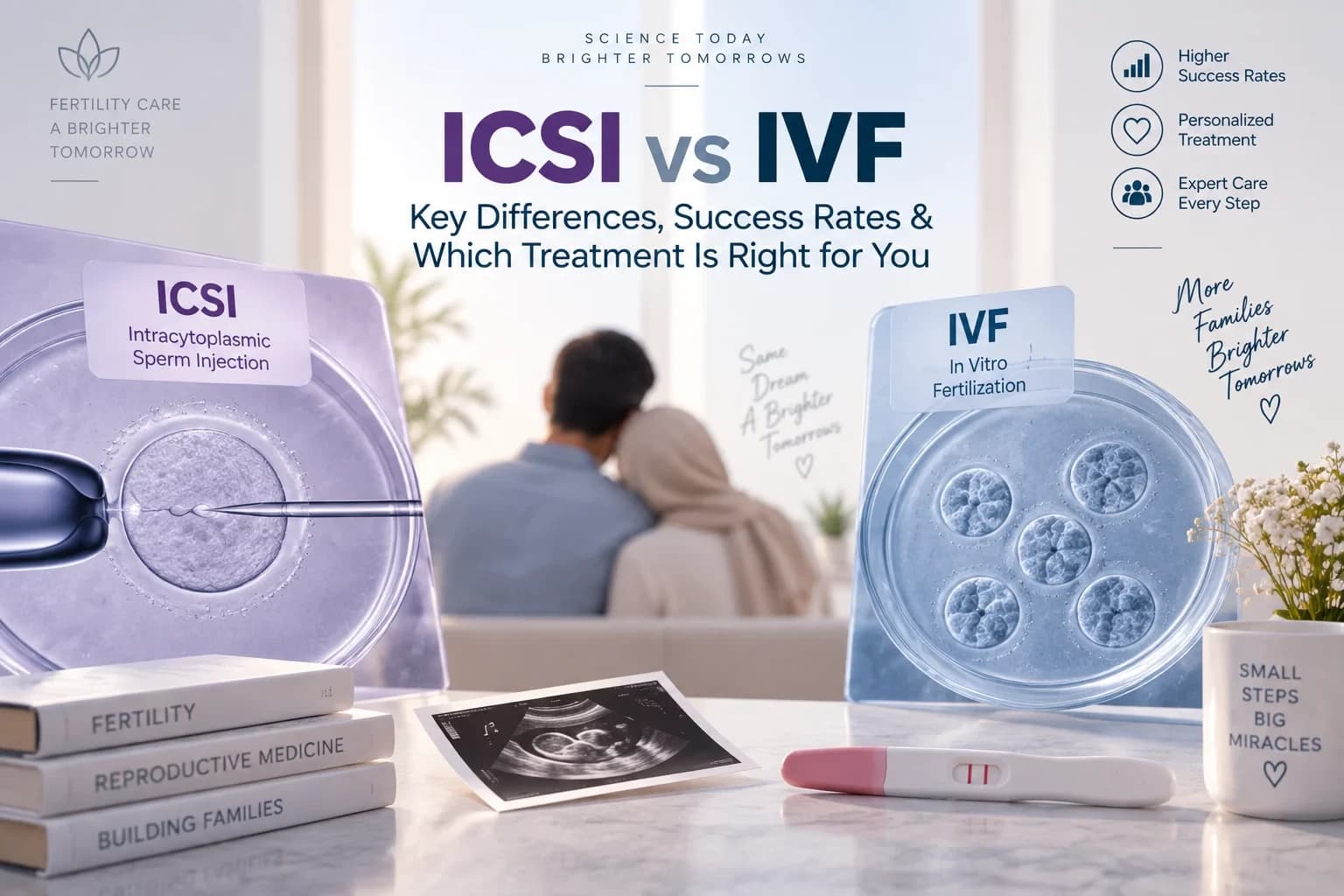
When fertility treatment is being considered, two terms often appear together: IVF and ICSI. Although both are part of assisted reproductive technology and share many of the same treatment steps, the way fertilization happens in the laboratory is different. Understanding the ICSI vs IVF distinction can help couples have a clearer discussion with their fertility specialist about the most appropriate approach. The decision is not simply about choosing the newer or more advanced technique; it depends on factors such as sperm quality, previous fertilization results, egg number and quality, age, and the underlying cause of infertility.
What Is the Difference Between IVF and ICSI?
The main difference between IVF and ICSI is how the egg and sperm are brought together. In conventional IVF, prepared sperm are placed with mature eggs in a laboratory dish, allowing fertilization to occur without directly injecting a sperm into the egg. With ICSI, an embryologist selects a single sperm and injects it directly into a mature egg using specialized laboratory equipment. The ovarian stimulation, egg retrieval, embryo development and embryo transfer stages can otherwise be very similar. Therefore, ICSI is best understood as a specific fertilization technique used within an IVF treatment cycle rather than a completely separate fertility treatment.
How Does the ICSI Procedure Work?
The ICSI procedure takes place after eggs have been collected during an IVF cycle. Mature eggs are identified in the laboratory, and an embryologist selects an individual sperm for injection. The sperm is then carefully introduced into the egg to attempt fertilization. If fertilization occurs, the resulting embryo is monitored as it develops before an appropriate embryo may be transferred to the uterus or frozen for later use. ICSI can be particularly useful when sperm have difficulty fertilizing an egg on their own, including situations involving very low sperm numbers, poor movement or surgically retrieved sperm. However, ICSI does not guarantee fertilization, embryo development, pregnancy or live birth.
IVF or ICSI Which Is Better for Infertility Treatment?
There is no universal answer to IVF or ICSI which is better because the appropriate technique depends on the reason for infertility. Conventional IVF may be suitable when sperm parameters are adequate and there is no previous history of fertilization failure. ICSI is more commonly considered when there is a significant male factor, previous failure or very low fertilization with conventional IVF, or when sperm must be obtained surgically. Current evidence does not support automatically adding ICSI to every IVF cycle. In its 2026 committee opinion, ASRM concluded that routine ICSI for patients without male factor infertility or previous fertilization failure does not improve live-birth outcomes.
When Is ICSI Recommended for Male Factor Infertility?
Male factor infertility treatment may involve ICSI when semen analysis shows significant problems with sperm concentration, movement or morphology, particularly when these problems are severe enough to make conventional fertilization less likely. ICSI may also be considered when sperm are retrieved directly from the testicle or epididymis because very few sperm are available in the ejaculate. A semen analysis is an important part of evaluating the male partner, and abnormal findings may require confirmation and further assessment before treatment is selected. The goal is not simply to use ICSI because sperm parameters are imperfect, but to determine whether direct injection is likely to provide a meaningful benefit in the specific case.
IVF vs ICSI Success Rates: What Should You Expect?
When comparing IVF vs ICSI success rates, it is important to distinguish fertilization success from the ultimate chance of having a baby. ICSI can improve the likelihood of fertilization in certain patients, especially when there is a clear sperm-related problem or previous fertilization failure. However, a higher fertilization rate does not automatically translate into a higher pregnancy or live-birth rate. Factors such as the woman's age, ovarian response, egg quality, embryo quality, uterine factors and the underlying infertility diagnosis can have a major influence on the final outcome. CDC data also emphasize that ART success rates vary substantially according to patient and treatment characteristics, so a clinic's or individual's expected outcome should not be reduced to one universal percentage.
What Are the Risks and Benefits of ICSI Compared With IVF?
Both approaches are performed within IVF treatment, so many of the medical steps and potential risks are shared. The main potential benefit of ICSI is that it can bypass some difficulties involved in sperm entering the egg naturally, which is especially relevant in significant male factor infertility. On the other hand, ICSI requires additional laboratory manipulation, specialized expertise and resources, and it may increase the overall cost and complexity of treatment. Current evidence also does not show a clear live-birth advantage from routine ICSI when male factor infertility is absent. For this reason, the benefit should be weighed against the additional procedure rather than assuming that ICSI is automatically superior.
How Do You Choose Between IVF and ICSI?
Choosing between IVF and ICSI should start with a complete fertility assessment rather than a preference for one technique. The fertility specialist may consider:
Semen analysis and the severity of any sperm abnormalities.
Previous IVF results, particularly unexpected or complete fertilization failure.
The number and maturity of eggs expected or retrieved.
The underlying diagnosis and previous fertility treatments.
Whether sperm must be obtained surgically.
The patient's age and other factors affecting reproductive outcomes.
The important point is that ICSI is not necessarily “stronger IVF.” It is a laboratory fertilization method that may be highly valuable when there is a specific indication. For patients without a clear indication, evidence-based guidelines increasingly favor avoiding routine use simply on the assumption that more intervention means a better result.
Is ICSI Always Better Than Conventional IVF?
No. ICSI can be the preferred option in selected situations, particularly when male factor infertility is significant or conventional IVF previously resulted in poor or failed fertilization. But when sperm parameters are adequate and there has been no previous fertilization problem, current evidence does not show that routine ICSI improves the chance of a live birth. A large body of research has found similar reproductive outcomes between ICSI and conventional IVF in many non-male-factor cases. The most appropriate choice should therefore be individualized after reviewing both partners' fertility evaluation and the laboratory strategy of the treating center.
Book a Fertility Consultation to Choose the Right Treatment
If you are unsure whether conventional IVF or ICSI is more appropriate, discussing your case with a fertility specialist is the safest next step. A personalized assessment can help determine whether sperm-related factors, previous treatment outcomes, ovarian response or another fertility issue should influence the laboratory fertilization method. Dr. Marwa Wanas provides fertility and ICSI care in Alexandria, including evaluation of delayed conception and assisted reproductive treatments. The treatment plan should always be based on your individual medical history and fertility investigations rather than on success-rate claims alone.
Frequently Asked Questions About ICSI vs IVF
Is ICSI more successful than IVF?
Not necessarily. ICSI can improve fertilization in selected cases, especially with significant male factor infertility or previous fertilization failure, but it has not been shown to universally improve live-birth rates compared with conventional IVF.
What is the main difference between IVF and ICSI?
The key difference is fertilization in the laboratory. Conventional IVF places sperm and eggs together, while ICSI involves injecting one selected sperm directly into a mature egg. Most other stages of treatment can be similar.
Is ICSI better for low sperm count?
ICSI may be recommended when sperm count is very low or sperm movement is significantly impaired because direct injection can help overcome some barriers to fertilization. The decision should follow a proper semen and fertility evaluation.
Does ICSI guarantee pregnancy?
No. ICSI is designed to help achieve fertilization; it does not guarantee embryo development, implantation, pregnancy or live birth. Outcomes depend on several factors affecting both partners.
Which is better, IVF or ICSI?
Neither treatment is universally better. Conventional IVF may be appropriate when sperm parameters are adequate, while ICSI can be particularly useful for significant male factor infertility or previous fertilization failure. A fertility specialist can determine which approach best fits the individual case.