

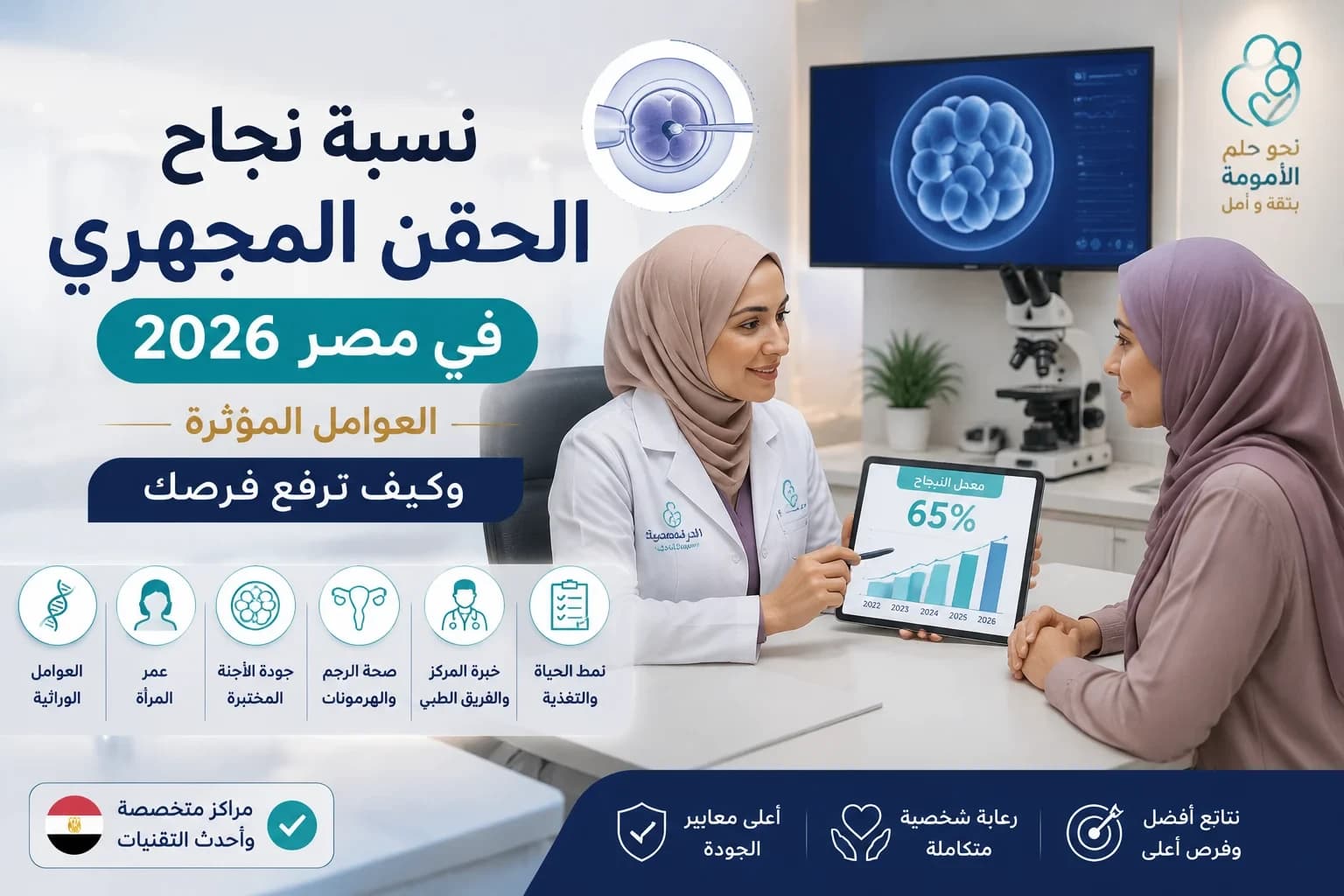
Intracytoplasmic Sperm Injection (ICSI) is one of the most advanced fertility treatments that has helped thousands of couples achieve their dream of having a baby, especially in cases where natural conception is difficult. With continuous improvements in embryo laboratory techniques and medical expertise, the ICSI success rate depends on several factors rather than the procedure itself.
In Egypt, success chances vary from one couple to another depending on the woman’s age, egg quality, sperm condition, embryo quality, and the body’s response to treatment. Therefore, accurate evaluation before starting the ICSI process helps the doctor choose the most suitable treatment protocol to increase the chances of pregnancy.
What Is the ICSI Success Rate in Egypt 2026?
The ICSI success rate generally ranges between 40% and 60% in many cases, but it can be higher or lower depending on each couple’s medical condition. There is no single success percentage that applies to everyone because the outcome depends on egg quality, embryo quality, the woman’s age, the medical team’s experience, and careful monitoring throughout the treatment process.
Higher success rates are usually seen in younger women who have a good ovarian reserve and healthy-quality eggs. However, success chances may decrease with age due to the natural decline in egg quantity and quality, especially after the mid-thirties.
For this reason, couples should not rely only on general percentages when evaluating their chances. A complete medical assessment and a personalized treatment plan are essential for achieving the best possible outcome.
What Factors Affect the ICSI Success Rate?
The factors affecting ICSI success include many details that begin before the procedure itself, not only during egg retrieval or embryo transfer. Every stage of the fertility journey can influence the final result, starting from evaluating both partners’ health to selecting the best embryo for transfer.
Woman’s Age and Egg Quality
A woman’s age is one of the most important factors affecting ICSI success. As age increases, egg quality naturally decreases, which may affect the ability of embryos to develop normally.
Success chances are usually higher in women under the age of 35. For women above this age, a more detailed evaluation of ovarian reserve and egg quality is needed before estimating pregnancy chances.
Sperm Quality
Sperm quality plays a major role in ICSI success, as the procedure depends on selecting a single sperm and injecting it directly into the egg.
The doctor evaluates sperm count, movement, and shape. Some cases may require additional techniques to obtain the best possible sperm sample, especially when there is severe male infertility or very low sperm availability.
Embryo Quality and Uterine Lining: How They Affect Success
After fertilization occurs in the laboratory, an important stage begins: evaluating embryo quality and selecting the most suitable embryo for transfer into the uterus. Embryo quality is one of the main factors that influence implantation and pregnancy chances.
The uterine lining must also be prepared properly to receive the embryo. Therefore, doctors monitor endometrial thickness, hormone balance, and any conditions such as inflammation or changes that may affect implantation.
Success of ICSI in Egypt does not depend only on embryo formation, but on the complete process from ovarian stimulation and egg retrieval to embryo transfer and pregnancy monitoring.
Success of ICSI in Egypt: Does It Differ Between Clinics?
Success rates may vary between fertility centers depending on several factors, including the doctor’s experience, embryo laboratory quality, available technology, and the way patients are monitored before and after the procedure.
When choosing a clinic for ICSI treatment, couples should focus on the quality of medical care rather than cost alone. Working with a specialized fertility doctor helps create a suitable treatment plan and reduce factors that may affect pregnancy chances.
At Dr. Marwa Wanas Clinic in Alexandria, every case is carefully evaluated to develop a personalized treatment plan based on the specific cause of infertility, whether related to ovulation problems, sperm issues, or other reproductive factors.
ICSI After Age 35: Are Pregnancy Chances Still Possible?
ICSI after age 35 is one of the most common concerns among women who want to become pregnant because fertility gradually decreases with age.
After the age of 35, egg quantity and quality may decline, which can affect the chances of developing healthy embryos. However, this does not mean pregnancy is impossible. Many women successfully achieve pregnancy through ICSI after this age.
Success chances depend on several factors, including ovarian reserve, hormone test results, sperm quality, uterine health, and the personalized treatment plan recommended by the doctor.
Tips for Successful ICSI Before and After the Procedure
Following certain guidelines can help improve overall health conditions and support the fertility treatment journey. While these tips cannot guarantee pregnancy, they can help prepare the body for the procedure and improve overall readiness.
Important tips for successful ICSI include:
Following all doctor’s instructions and medication schedules.
Maintaining a healthy weight before starting treatment.
Eating a balanced diet rich in protein and vegetables.
Avoiding smoking and harmful substances.
Getting enough sleep and reducing stress as much as possible.
Completing all required medical tests before starting the treatment cycle.
After embryo transfer, it is important to follow the doctor’s instructions carefully and avoid excessive physical effort or taking medications without medical advice.
Your Experiences With ICSI: What Can We Learn?
Many women search for your experiences with ICSI to understand what they may expect during the treatment journey. However, it is important to remember that every case is different.
Some couples achieve pregnancy from their first attempt, while others may need more than one cycle. Differences are related to infertility causes, woman’s age, embryo quality, and the body’s response to treatment.
Successful experiences often share several important factors, including choosing a specialized doctor, following the treatment plan, and maintaining close medical follow-up throughout every stage.
The most important point is not to compare one case with another because each couple’s chances should be evaluated based on their own medical history and test results.
Why Choose Dr. Marwa Wanas for Your ICSI Journey in Alexandria?
Dr. Marwa Wanas provides specialized care in infertility treatment and ICSI, with extensive experience in evaluating different cases and creating personalized treatment plans according to each couple’s needs.
The treatment journey depends on accurate diagnosis, choosing the right technique, and continuous follow-up to provide the best possible chance of achieving pregnancy.
Through her experience in ICSI and obstetrics and gynecology, Dr. Marwa Wanas combines advanced medical care with compassionate support throughout a journey that can be emotionally challenging for many women.
Book Your Consultation With Dr. Marwa Wanas to Improve Your ICSI Success Chances
If you are considering ICSI or want to understand your personal chances of success, the first step starts with an accurate medical evaluation.
Dr. Marwa Wanas in Alexandria helps patients understand the causes of delayed pregnancy, evaluate success factors, and develop a suitable treatment plan using advanced fertility treatment methods.
Book your consultation today and begin your motherhood journey with specialized medical care focused on every detail of your case.
Frequently Asked Questions About ICSI Success Rate
What is the ICSI success rate for the first attempt?
The ICSI success rate varies from one case to another. It can be higher, especially among younger women with good-quality eggs and embryos.
Does ICSI success decrease after age 35?
Success chances may decrease after age 35 due to reduced egg quality, but many women can still achieve pregnancy after proper evaluation and suitable treatment.
What are the most important factors affecting ICSI success?
The main factors affecting ICSI success include the woman’s age, egg quality, sperm condition, embryo quality, uterine health, and the doctor’s experience.
Does embryo quality affect ICSI success?
Yes. Embryo quality is one of the most important factors affecting implantation and pregnancy after embryo transfer.
How long does the ICSI journey take until pregnancy results?
The ICSI process usually takes several weeks, starting from ovarian stimulation until the pregnancy test after embryo transfer. The exact timeline depends on each patient’s response to treatment.